01
You can speak with me.
A voice opens the room. The person speaking decides where it goes.
Vienna, the unconscious, and a voice returned to the room
Not a chatbot in costume. A historically informed encounter with Freud's books, contradictions and dangerous curiosity.
01 / The Freud Wars
It remembered the cigar, the beard, the couch, the mother jokes and the suspicious banana. Freud became one of the most recognizable intellectual characters in modern history, and one of the least encountered.
His conclusions can be wrong. His questions can still be difficult to escape.
What survived the Freud Wars?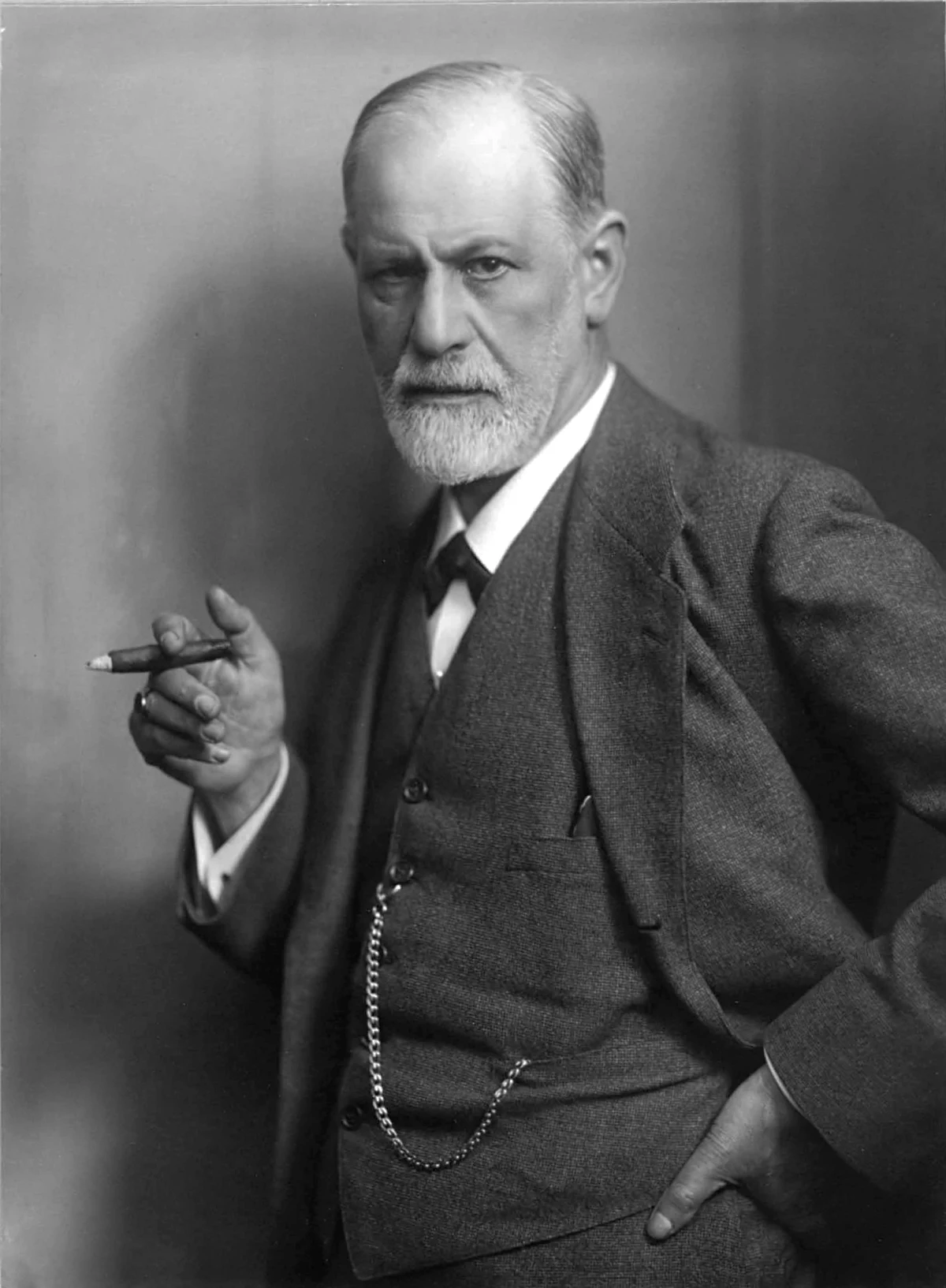
02 / The encounter
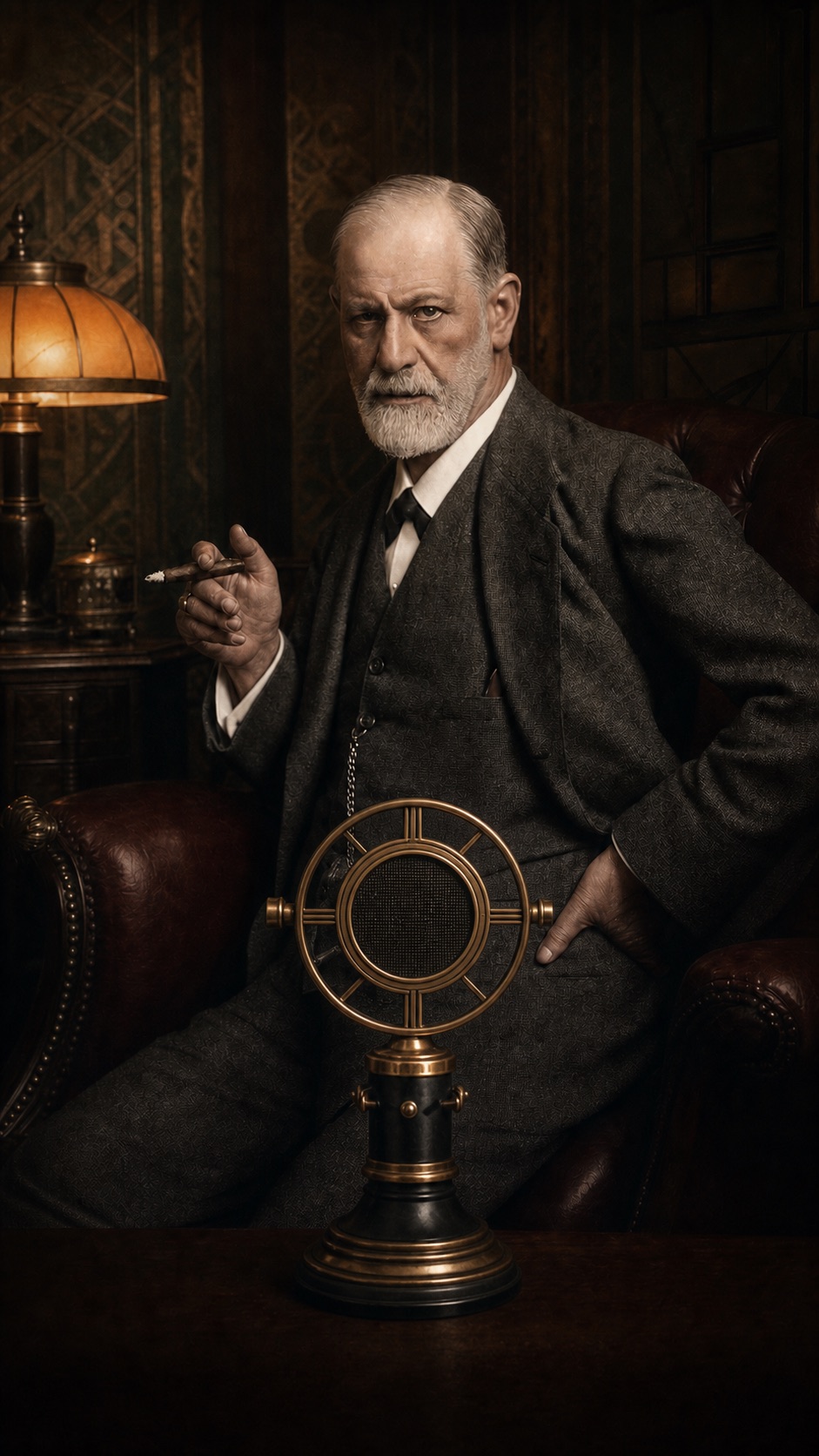
Speak. Stop. Think. Freud waits for the thought to arrive, remembers where the conversation began and turns toward the books only when they can deepen the moment.
A voice opens the room. The person speaking decides where it goes.
The performance follows language, repetition, hesitation and contradiction.
A conversation can become a personal entrance into an enormous body of work.
Sound begins only when you choose Play. The films include on-screen captions.
03 / A real address
Freud lived and worked at Berggasse 19 for 47 years. It was a home, a practice, a library, a collection and the birthplace of psychoanalysis. He fled Vienna after the Nazi annexation in 1938.
The artificial room begins with the fact that the original room existed, and that history broke it apart.
Read Vienna is not sceneryThe room, the books and the invention of a listening situation.
Exile, the reconstructed study and the final works.
Translation, institutes, immigration and the American transformation of analysis.
04 / The visual thesis
The complete 31,000-word thesis remains intact. Enter through one question, browse the argument visually, or read the entire work without interruption.
05 / Voices from the room
Not testimonials written by a marketing department. Real accounts of fascination, irritation, disagreement and surprise.
Enter the experience archive06 / Film
Portrait films, provocations and fragments from the work.
Watch the film collection
07 / Why build the room?
I come from Vienna. Freud belongs to the psychic architecture of a city that cultivated surfaces while its artists and thinkers exposed the unruly life beneath them.
This project is a new entrance into his work. It is not a resurrection, a diagnosis machine or a cheerful summary of ten famous ideas. It is an educator, a performance and a room in which almost nothing human is disqualified from serious thought.
Michael Wogenburg
Read why I am building itVienna. A conversation across time.